Wednesday, 5 June 2019

Free Games from Locomalito.com for Linux

The person behind the Locomalito.com website has self made video games that are sort of remakes and re-imagined takes on classic video games. Some of the games are freeware and some are available on proprietary gaming hardware.

Although most of the games present on the website are for the Windows environment, some are available for Linux too.

At the time of writing this post, the games that are available for free on Linux from the Locomalito website are:

GAURODAN (2013)
Game Info (from the website):
About the Game: Fly around the Canary Islands and destroy cities, armies and colossal creatures in your path through a precision shmup. Controlling Gaurodan requires skill, since its movement is unstoppable and its attack can be oriented to hit ground or air targets.
Links: https://locomalito.com/gaurodan.php || https://locomalito.com/juegos/Gaurodan_linux.zip

MALDITA CASTILLA (2012)
Game Info (from the Website):
About the Game: Maldita Castilla (Cursed/damn Castile) is an action platformer full of actual myths from Spain and some regions of the medieval Europe. The player must run, jump and throw weapons along 6 chapters, divided into sections filled with dangers and bosses. It takes the visual style of 80s arcades, with no more than raw pixel art and a dark palette displayed through a dirty old monitor.
Links: https://locomalito.com/maldita_castilla.php || https://locomalito.com/juegos/Maldita_Castilla_linux.tgz

EFMB (2012)
Game Info (from the Website):
About the Game: EFMB is the remake of the brilliant ZX Spectrum game created by Dave Hughes in 2012. The game includes bizarre mechanics that force players to concentrate and use all their mental power. The remake has new elements and game modes for cooperative and versus plays.
Links: https://locomalito.com/efmb.php || https://locomalito.com/juegos/EFMB_linux.tar.gz

L'ABBAYE DES MORTS (2010)
Game Info (from the Website):
About the Game: Faith will be your only weapon in this platformer styled like a ZX Spectrum game. Black backgrounds, 1 color sprites and 1 bit sounds are a proper fit for a raw story. The lack of details turn on the player's imagination, creating a unique experience for each player.
Links: https://locomalito.com/abbaye_des_morts.php || https://github.com/nevat/abbayedesmorts-gpl

Monday, 3 June 2019

'Magic: The Gathering' like/based Open Source Single-Player Fantasy Card Game on Linux

'Magic: The Gathering' is a very famous collectible card game. There have been many video games based on this card game, but most, if not all, were made targeting the proprietary operating systems. 

A Linux native game and that too an open source game exists for this specific card game. It is named 'Magarena' and is available from the github website: https://github.com/magarena/magarena || https://magarena.github.io

From the game's website:
Magarena is an open-source, single-player fantasy card game played against a computer opponent. The rules for Magarena are based on (but not exactly the same as) the first modern collectible card game. Its main goals are an advanced AI, intuitive interface, engaging gameplay and program stability.
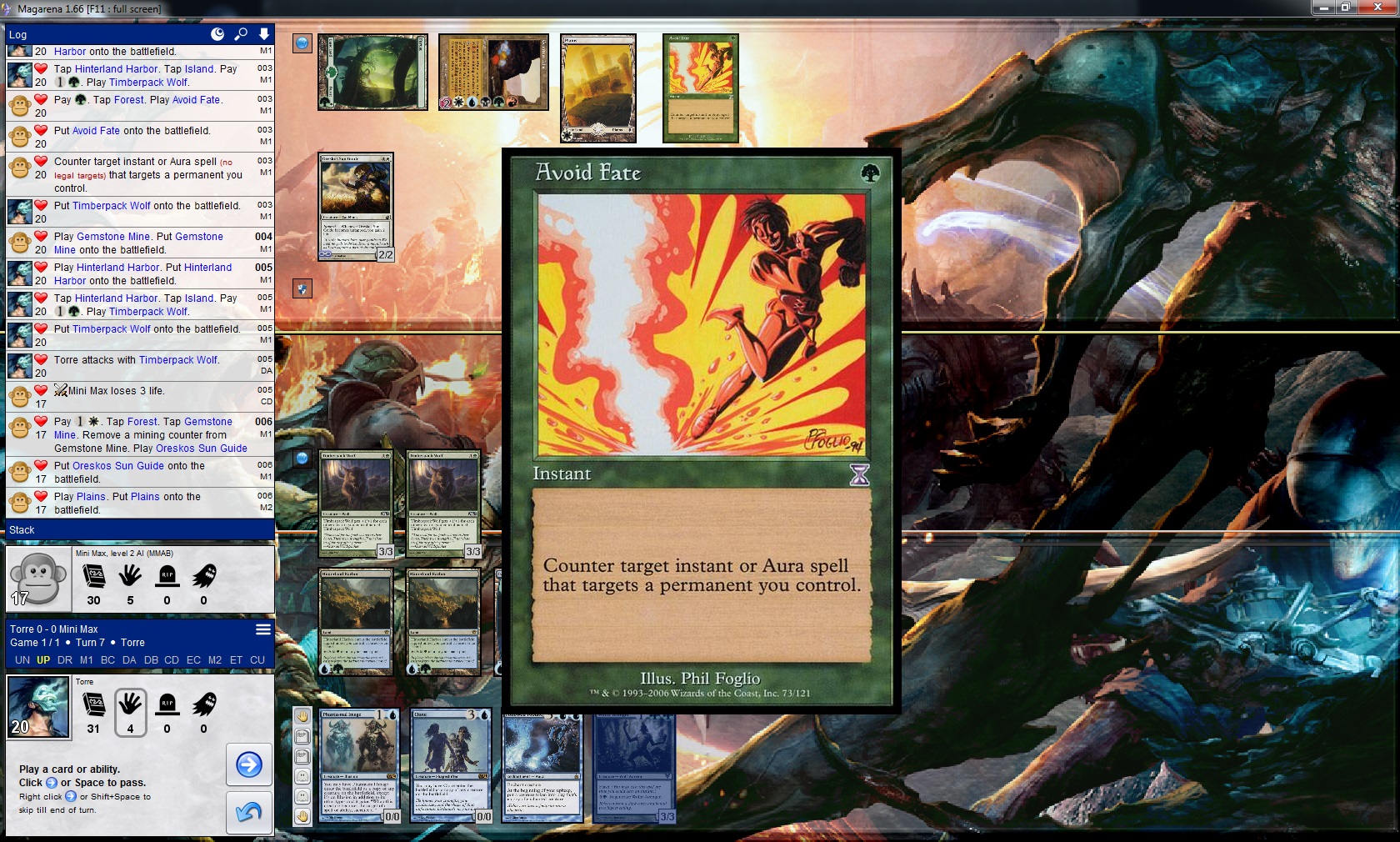
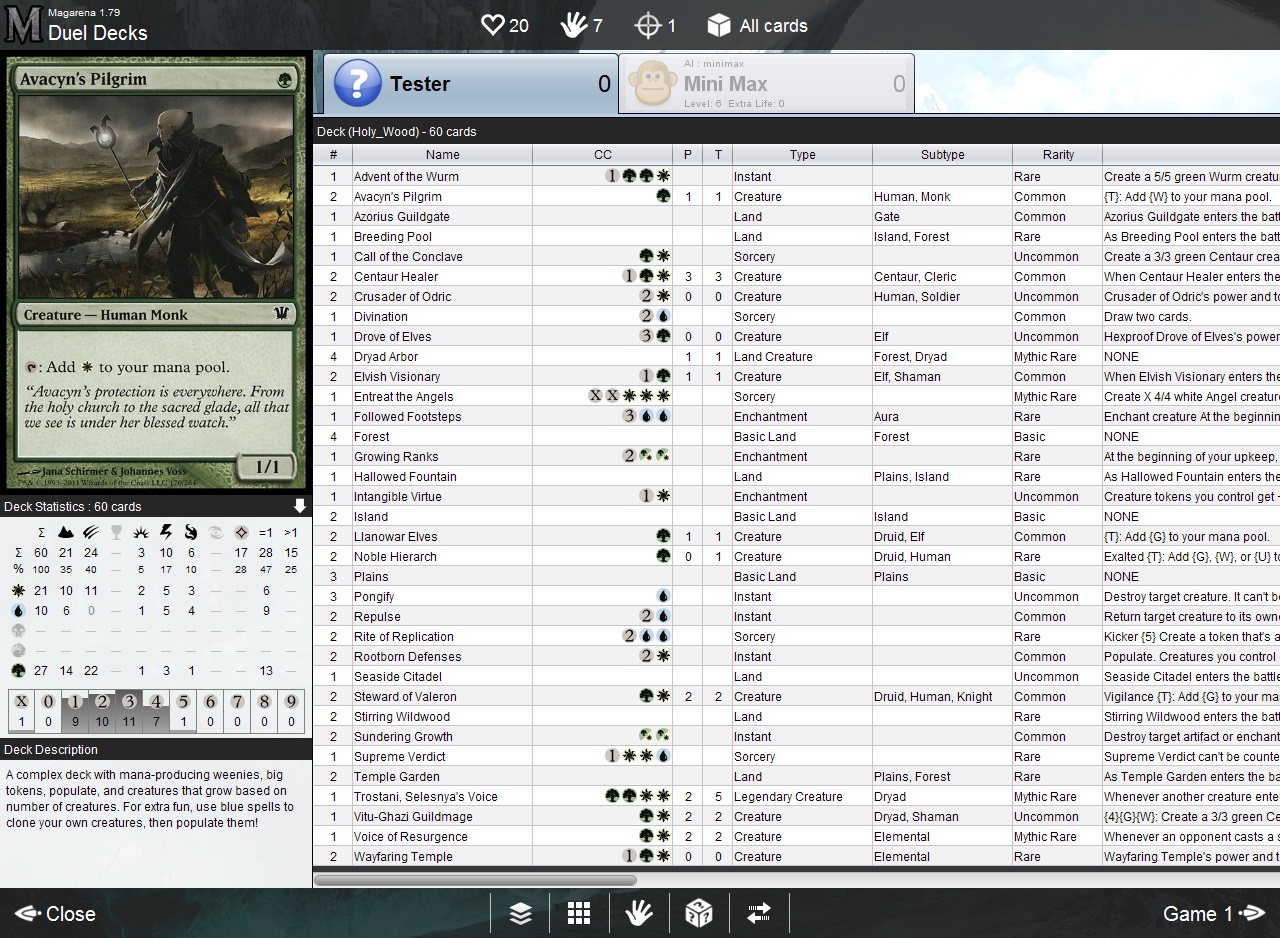
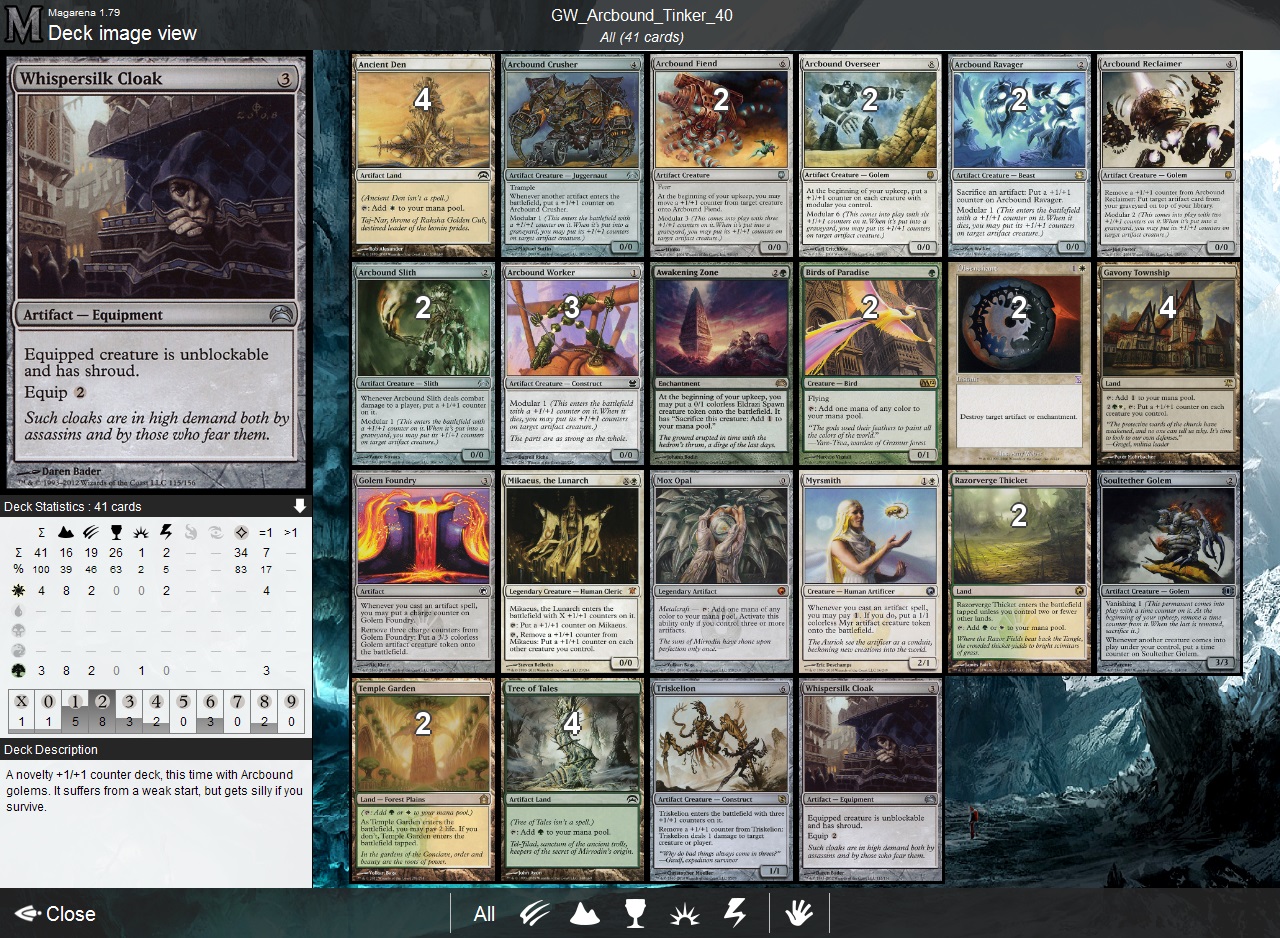
A few screenshots, from their website:


Monday, 15 April 2019

Free Visio alternatives in Linux for making Flowchart Diagrams? Yes, Draw.io and yEd Graph Editor

I have used Microsoft Visio at my workplace to create flowcharts, departmental flowcharts, swimlane diagrams, and more. I find working in Visio quite good except for a few problems here and there. The major problem is adding 'connection' points to shapes, font size, and general selecting and moving shapes (especially for swimlane diagrams).

But, you cannot go much wrong while using Visio, it is a solid diagramming tool. So, I was just wondering what are the available options on the Linux platform. I am a fan of the Linux platform and the Free and Open Source community. So I searched for options.

The choices were: The Draw.io online tool, LibreOffice Draw, Dia, yEd Graph Editor, Calligra Flow, and some more. I tried Draw.io, LibreOffice Draw, Dia, and yEd Graph Editor.

Dia's last download version is from the year 2011 and IMHO, this software has reached an end of usage time-period. We could still may be use Dia to create very small, super basic diagrams. Because any further complexity will require too much manual work.

Draw.io worked fabulously. There was support for creating all the types of diagrams that I wanted to make. Many would be satisfied with this tool, but for me the online nature of the tool is something of a problem. The main issue that I find hard to manage is that what happens to my diagrams that I make using this tool. Should I assume that selecting to only save offline does not save online into their server(s). What happens to the diagrams that are saved into their server(s). Is there some privacy.
Although Draw.io fulfilled all diagramming needs, the online only way of working is a problem for me.

Next, I tried LibreOffice Draw. This software was quite good in creating normal flowcharts, but does not have built in support for swimlane diagrams, the most common diagrams that I have to make. For other needs, I found LibreOffice Draw to be on par or quite comfortable to use.

The last tool that I tried was yEd Graph Editor. This tool is a Freeware and not Open Source, but this is the closest to having nearly all functionality (like Draw.io) in an offline diagramming tool. There are a few things that are of trouble, mostly the connectors not automatically changing shape/directions (especially when the connector is not just a straight line), and not much department graphics. Apart from the drawbacks, this tool has major plus points. Firstly, this tool is Offline and free for commercial usage (at least the version that I tried).

In conclusion, if you have no problems using online diagramming tool, then Draw.io is the best alternative to Visio. If you prefer offline usage, then try yEd Graph Editor. You will not be disappointed with these two.

Tuesday, 26 February 2019

Calculate an ideal 'Streaming Media' company's revenue in India - Part 2

Please find the first part in this series at: https://aajkyakaroon.blogspot.com/2017/12/calculate-ideal-streaming-media.html

Lets continue our discussion and calculate the money earned by a movie. Using our previous discussion, a person may spend around 5000 minutes per month on a streaming service. The person would give Rs. 100 out of which Rs. 30 would go to the service provider and Rs. 70 goes to the content providers. Also, we had supposed that the total subscribers of a streaming service to be 1 crore people.

The Rs. 70 would be distributed among the 5000 minutes of screen time. 70 / 5000 = Rs. 0.014 per minute.

Lets consider a movie that is 2 hours long, i.e. 120 minutes. The movie would be worth 0.014 * 120 = Rs. 1.68. Now, suppose out of the 1 crore users, 5-10 lakh users watch this movie just one time in a month. This would fetch the content provider Rs. 8,40,000 to Rs. 16,80,000 for that month.

This amount can be considered as just additional income from the movie and would not warrant an exclusive (i.e. no theatrical release) streaming release.

The only way to make a substantial income for a content provider would be to have a plethora of ready made content that would flood the service. This can be achieved by making episodic series, like a short series of  8 - 10 episodes or longer series of 18-24 episodes per season.

The service provider also needs to up-sell or increase its subscribers by either making the service costlier or by having much more subscribers.

How much subscriber increase there can be in India? Well, to subscribe to a streaming service, I would consider that the person would have enough income to spend on such a service, i.e., the person should be a tax payer or at least belong to a family where someone pays taxes. At this present time there are around 50 crore internet users in India, but only around 7 crore tax filers. Out of the 7 crore tax filers, may be 3 crores would be filing a zero tax? So that leaves around 4 crore people.

In the present date, I would think that a mass appeal streaming service could cover 1.5 - 2 crore people.

Thursday, 22 November 2018

RHEL 8 Beta - Half Baked Release

RHEL 8 Beta version was announced a few days back and I was utterly disappointed with the direction RedHat or should I say IBM has taken.

Maybe it is the fault of the upper crust in RedHat that have purposely delayed RHEL 8 to drum up their "new" technologies that were just not ready for prime time. The technologies that RedHat were peddling and showcasing to be included (again IMHO) in RHEL 8 were DNF 3, GNOME 3.30 / 4, GIMP 2.12 / 3.0, Pipewire, Silverblue, Removal of Python 2 entirely, and the Latest and greatest Wayland.
These all were described in my previous article here -> https://aajkyakaroon.blogspot.com/2018/06/rhel-8-release-date-update-2-chasing.html

But, these "new" technologies were never going to be stable enough even in Fedora 30. Wayland is 'Way' behind in terms of features present in the current display server. There is not even a stable remote desktop connectivity option enabled by default in Gnome in Wayland.

RedHat wasted at least a year to drum up these new technologies and delayed RHEL 8 for absolutely no reason at all. What IBM did is a sane decision of releasing RHEL 8 and then updating the release to include  these "new" technologies may be in RHEL 8.2/8.3.
If they decide against updating the release to include these "new" technologies in RHEL 8 then I think that RHEL 9 will not be much far behind.
Or, my hope that these "new" technologies will be stable enough in 2 years is misplaced. Hmm, may be this is the case and that's why Canonical has decided to support Ubuntu 18.04 for 10 years. May be these technologies are just in their nascent stage and will require a decade to mature.

In this current form of RHEL 8, I do not think there would have been a major difference in basing the release on Fedora 26/27. This would have saved approximately a year of time.

IMHO, a RHEL refresh was required in 2017 and this RHEL 8 of 2019 is just not justifiable. May be we can add a few repositories in RHEL 7 to get a new kernel and newer versions of software and just skip RHEL 8 till at least RHEL 8.2/8.3.

Tuesday, 21 August 2018

Best Open Source and Free games and tools for Linux

I was quite inspired with a series of posts on opensource.com that listed five open source games on GNU/Linux systems, in six different genres.

The links to these articles are:

  • 5 open source strategy and simulation games for Linux -> https://opensource.com/article/18/8/strategy-simulation-games-linux
  • 5 open source role-playing games for Linux -> https://opensource.com/article/18/8/role-playing-games-linux
  • 5 open source racing and flying games for Linux -> https://opensource.com/article/18/7/racing-flying-games-linux
  • 5 open source puzzle games for Linux -> https://opensource.com/article/18/6/puzzle-games-linux
  • 5 open source card and board games for Linux -> https://opensource.com/article/18/3/card-board-games-linux
  • 5 arcade-style games for Linux -> https://opensource.com/article/18/1/arcade-games-linux
While these articles are quite good, but they are also very limiting. These articles mention only those game that are fully open source, i.e., the games that have their source code and all assets freely distributed. Also, these articles cover only those games that the author knows or are very popular in the community.

While I am a GNU/Linux, i.e., Peppermint OS, user myself, I am not so strict in my preference of the tools that I use. I am a GOG and Steam user and my games library in these two together has swelled to more than 100 games (This is mostly because of the excellent sales on these two sites and the bundles through the Humble Bundle site)

In the coming articles in this blog I would jot down the many games and tools that can be freely used on GNU/Linux systems. Also, I won't be strict in following genres and would list a few games/tools in each post.

Wednesday, 6 June 2018

RHEL 8 Release Date Update # 2 -> Chasing Perfection

RHEL 8 Beta has been released and my take on this is presented in this blog post --> https://aajkyakaroon.blogspot.com/2018/11/rhel-8-beta-half-baked-release.html

Please remember -> This blog post is just my speculation.

Something is amiss with RHEL 8. RedHat is chasing perfection or may be the current technology stack that RedHat wants is just not ready yet.

Some of the technologies that RedHat wants to include in RHEL 8 are (from my understanding):
  • DNF 3
  • GNOME 3.30 / 4
  • GIMP 2.12 / 3.0
  • Pipewire
  • Silverblue
  • Removal of Python 2 entirely
  • Latest and greatest Wayland
DNF 3 development has just started in March 2018 according to the article on https://rpm-software-management.github.io/
What will DNF 3 give that DNF 2 does not give? Frankly, the answer is what we all want to hear. Better performance, consistency, save the world, and this is just the tip of the ice berg. And, we definitely want to whole ice berg, don't we?

Why (always) the next GNOME. Because, even in GNOME 3.26 the remote desktop capability is not enabled by default (on Wayland). This is the biggest bottleneck in releasing an enterprise OS.
When will GNOME have this capability. The answer is always the next one. And when the next one arrives, the answer will still be the next one. I hope they get it right before GNOME 4, otherwise, as many have stated, GNOME 3 series is just a pile of hot *sauce*.
Who gave these people a million dollars? Hmm, beats me, cough RedHat cough.

But, this capability is tied to the Pipewire back-end. Pipewire is an under development multimedia wizard that will handle all video and audio use cases. The first priority is for video since we already have PulseAudio/Jack/ALSA for audio. In the future, Pipewire will replace these audio middleware and be an all encompassing technology for all things multimedia. The current state of this project is written in this article -> https://blogs.gnome.org/uraeus/2018/01/26/an-update-on-pipewire-the-multimedia-revolution-an-update/ (homepage for the article is https://blogs.gnome.org/uraeus/)

Oh, and the remote desktop capability in RHEL is also tied to Wayland. Because, RedHat has its heart set for using Wayland and no other.
Now, Wayland does not specifically state the way that can be used to enable remote desktop capability. Why? I do not know. May be Wayland can go different Ways. Wayland does not care which Way you take to get from point A to point B. Just pick a Way man.
So the good fellows at RedHat have chosen to dig holes, I mean Pipes, I mean, they chose to carve their own way and made Pipewire. So, at the moment, Pipewire is the only way that remote desktop capability can be achieved using Wayland in all Desktop Environments. Even the folks at KDE are using Pipewire to implement remote desktop.
The maturity of Wayland and Pipewire is the main bottleneck in implementing foolproof remote desktop capability.

RHEL 8 is also targeting a full transition to Python 3 and a full removal of Python 2. Well this cannot be done if they choose to include the current GIMP 2.10 version. The 2.10 version is still dependent on Python 2 and the GIMP devs have stated that it will require at least till the next version to be fully free of Python 2. What will be the next fully Python 3 GIMP version, I do not know, may be 2.12 or 3.0.

Silver bullet, oh I mean Silverblue will be the silver bullet that RedHat hopes will kill all the werewolves of package management. So, why all this work on DNF 3? Hmm, covering all bases I see. Flatpak all the way is the RedHat answer to Windows 95 in 2019/2020. So, we really are around 25 years behind the proprietary world. Who knew.
I always thought that GNU/Linux package management was the superior way of sharing open source software. Oh, now I get it, rpm and apt is not helping the proprietary software gain ground in GNU/Linux. So we just bend over and present our "better" side to them.
So, get ready for one off software products from the leading proprietary software makers that will not get updated or patched ever again. You know, the same as Windows 95 to Windows 10. We will become so privileged.

So, when will RHEL 8 be released. When the stars will align and the Sun and Moon are dancing. Well, obviously when all the technology is matured to a point where they can be included in a Fedora release. But, when will that happen. Well, Fedora 28 is gone and Fedora 29 is due sometime in the last months of this year (30 October 2018 - from https://fedoraproject.org/wiki/Releases/29/Schedule) I am more inclined to say Fedora 30 will be the one that may have all the technology stack included. What is the release date for Fedora 30? From this page -> https://fedoraproject.org/wiki/Releases/30/Schedule the date is in May 2019

In conclusion, RHEL 8 alpha/beta will arrive after Fedora 30, may be somewhere in 2019 and we may get to see the Sun, I mean RHEL 8, may be in 2019, if we are lucky, or most likely in 2020.